AI turns robots from stiff metal puppets into smooth, adaptive movers by teaching them through epic virtual training. Think of it like a robotic video game where machines learn walking by repeatedly falling and recovering. Sensors and machine learning help robots understand balance, interpret terrain, and adjust movements in real-time. It’s like giving robots a brain that constantly recalculates the perfect step. Want to see how deep this rabbit hole goes?
The Science Behind Robotic Movement
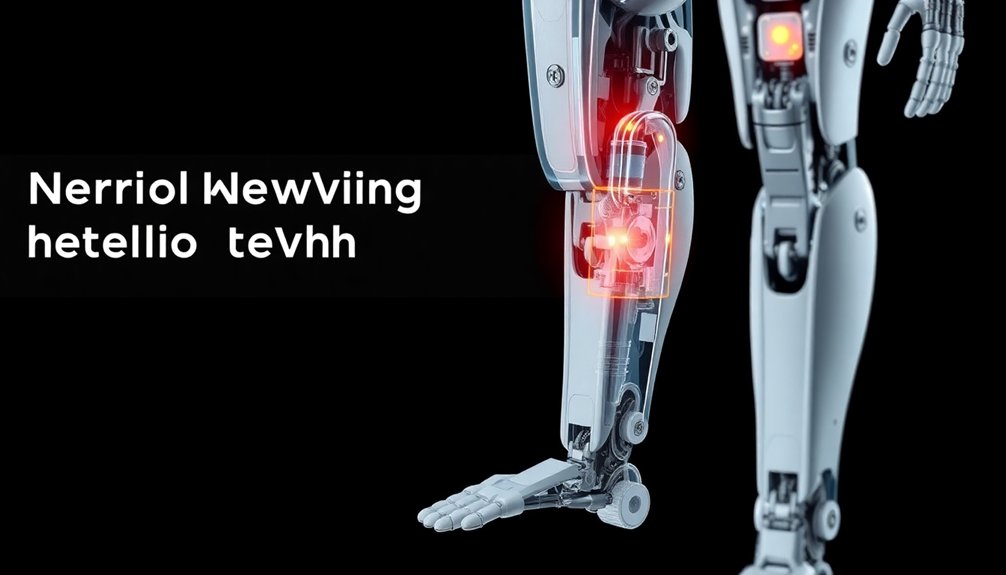
While biology might seem like an unlikely teacher for robotics, nature’s blueprint for movement is revolutionizing how machines walk, run, and navigate complex terrain.
AI is transforming robotic movement through advanced learning techniques like reinforcement learning, where robots fundamentally practice walking through digital trial-and-error. Mechanical engineers now integrate sophisticated sensors and computer vision to help robots understand their environment in real-time.
These smart machines learn agility by mimicking biological locomotion patterns, using encoders and inertial measurement units to track joint positions and maintain balance. The result? Robots that can adapt, make split-second decisions, and move with an almost organic fluidity.
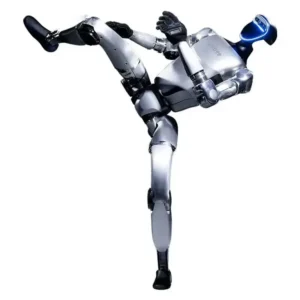
Unitree G1
A premium humanoid robot for serious demos, events, education, and advanced interaction. Best when you want a stronger,…
Neural network algorithms enable robots to analyze complex movement patterns, allowing them to learn and improve their locomotion strategies through continuous feedback and machine learning techniques.
Who would’ve thought machines could learn to strut as naturally as a cheetah or dance across uneven ground like a nimble mountain goat?
Reinforcement Learning and Natural Locomotion
When you imagine robots learning to walk, you probably don’t picture thousands of digital robots tumbling and recovering in massive virtual playgrounds—but that’s exactly how modern AI trains machines to move.
Reinforcement learning lets robots learn through trial and error, using high-fidelity physics simulations that compress years of training into hours. AI algorithms leverage domain randomization to create adaptable leg movements that look eerily human-like.
These smart systems optimize for natural locomotion by constantly adjusting based on feedback mechanisms, ensuring robots can transfer skills directly from virtual worlds to real-world performance.
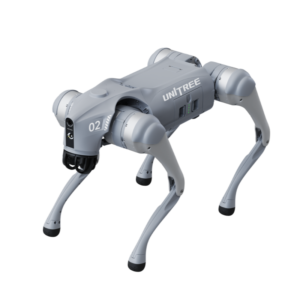
Unitree Go2
Meet the Unitree Go2 — a robot dog that walks, runs, jumps, and dances. It maps its environment…
Imagine a robot learning to walk across rocky terrain, falling thousands of times, but getting incrementally better with each attempt—that’s the magic of AI-driven robotic training. Neural networks enable robots to transform complex sensory inputs into intelligent, adaptive movement strategies.
Sensors, Feedback, and Real-Time Adaptation
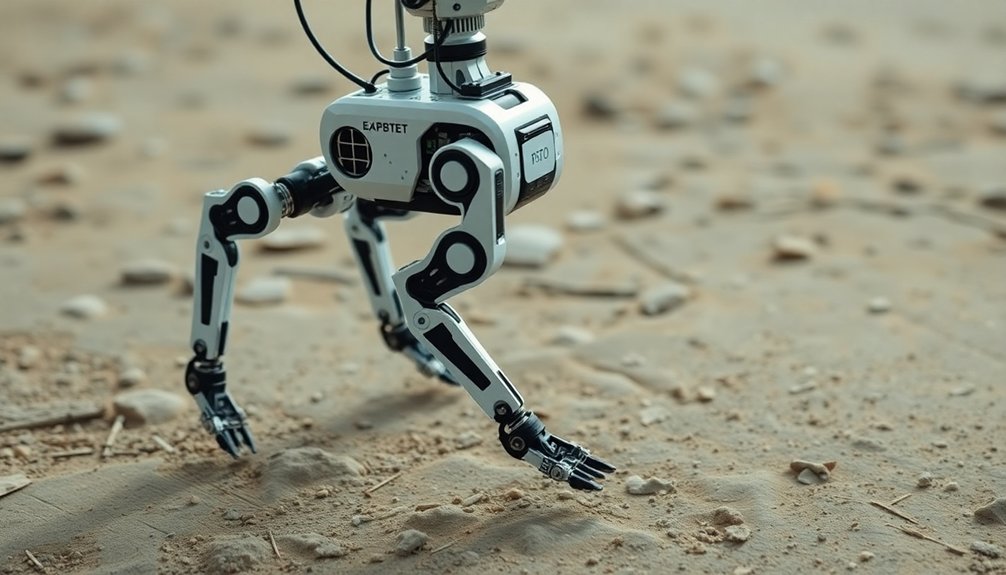
Because robots aren’t born knowing how to move, they need an incredibly complex network of sensors that act like their nervous system. Machine vision and AI algorithms transform raw data into intelligent movement strategies, letting robots adapt in milliseconds. Deep reinforcement learning enables robots to optimize their locomotion through continuous feedback and adaptive algorithms.
Think of these sensors as a robot’s internal GPS, constantly tracking balance, orientation, and environmental obstacles.
Reinforcement learning kicks this adaptation into overdrive. By processing feedback from inertial measurement units and encoders, robots learn locomotion patterns through constant trial and error.
High-frequency torque control helps smooth out jerky movements, making robotic motion feel more natural and less like a malfunctioning wind-up toy. It’s like teaching a toddler to walk, but with computational superpowers and zero tears.
Simulating Human-Like Walking Patterns
From precise sensor tracking to fluid movement, robots are graduating from clumsy machines to eerily human-like walkers. Reinforcement learning is transforming humanoid robots through mind-blowing training techniques:
- Thousands of virtual robots learn walking patterns in hyper-realistic simulations
- Neural network policies adapt to complex terrain dynamics
- Domain randomization enables seamless real-world environment shifts
- High-frequency torque feedback mimics natural human walking
- Actuator dynamics get optimized for power-efficient movement
You’ll watch these AI-powered machines balance and move with shocking precision.
By exposing robots to thousands of NVIDIA GPU-powered simulations, researchers rapidly compress complex movement algorithms into lightning-fast training sessions. Imagine robots that can navigate unpredictable landscapes as smoothly as a marathon runner—all thanks to clever computational tricks that turn rigid machines into fluid, adaptive movers.
Bridging the Gap Between Artificial and Biological Motion
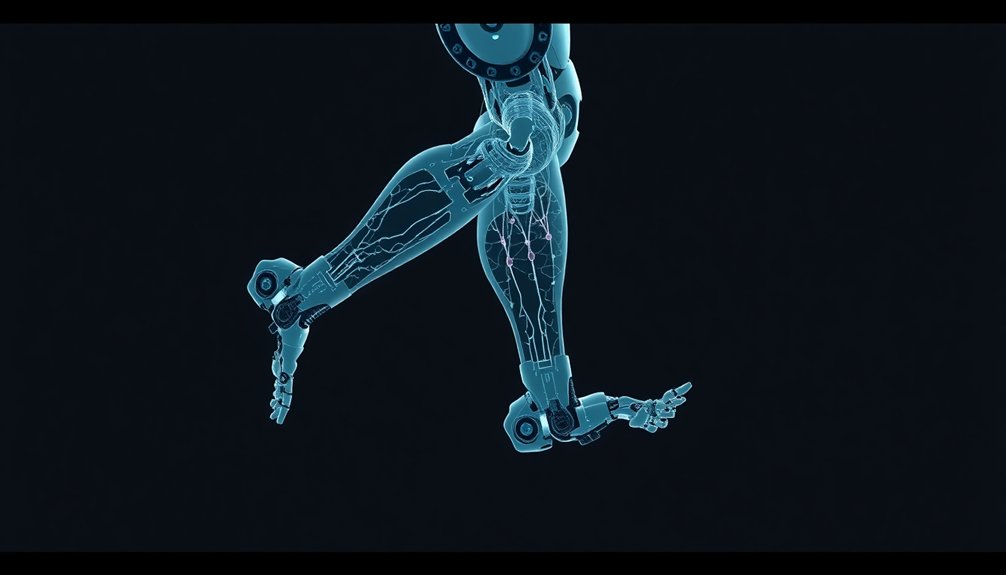
As robotic locomotion inches closer to mimicking biological movement, scientists are fundamentally playing a high-stakes game of “monkey see, monkey do” with nature’s most elegant locomotion engineers. You’ll be amazed how AI transforms clunky machines into graceful movers through reinforcement learning and sensor data optimization. Machine learning algorithms are revolutionizing how robots process complex sensory inputs to achieve more natural, adaptive movements.
| Robotic Trait | Biological Inspiration | AI Learning Method |
|---|---|---|
| Balance | Vertebrate Nervous System | Neural Network Algorithms |
| Movement | Animal Gait Patterns | Reinforcement Learning |
| Adaptation | Environmental Responsiveness | Sensor Data Processing |
Imagine robots that learn like toddlers – wobbling, falling, then suddenly nailing complex movements. It’s not magic; it’s artificial intelligence decoding nature’s locomotion secrets. By studying how animals navigate terrain, researchers develop algorithms that help robots shift from rigid, predictable machines to dynamic, responsive beings that can potentially outperform their biological counterparts.
People Also Ask About Robots
How Does AI Help Robots?
You’ll leverage AI to train robots through reinforcement learning, enabling them to adapt, analyze sensor data, and develop natural movement patterns by continuously refining their locomotion strategies in simulated and real-world environments.
How Do Robots Maintain Balance?
When push comes to shove, you’ll find robots maintain balance through inertial sensors, encoders, and adaptive control algorithms that track orientation, calculate center of mass, and make real-time adjustments during movement.
Why Is Artificial Intelligence Important for Using Robots to Move Real Objects?
You’ll rely on AI to help robots intelligently analyze environments, detect objects, and adapt their movements dynamically. It enables precise manipulation, learning from experience, and overcoming unexpected challenges while moving real-world objects efficiently.
How Robots Can Help People With Disabilities Walk Again?
Did you know 80% of stroke survivors can improve mobility? You’ll benefit from AI-powered robotic exoskeletons that detect muscle signals, adapt to your movements, and help you walk again by providing personalized, real-time physical support.
Why This Matters in Robotics
You’ve watched robots stumble from clunky machines to near-human movers. Crazy stat: AI-powered robots can now learn complex walking skills in just 20 minutes of simulated training. They’re not just mimicking human motion—they’re intelligently adapting, balancing, and responding in real-time. The future isn’t about perfect robots, but robots that learn and improvise like we do. Wild, right? Looks like our mechanical friends are finally getting their groove on.
Explore the robot families that fit this use case.
Browse the robots, compare the models, and reserve the right one without buying.
Use Futurobots to move faster, stay flexible, and get access to advanced robots without buying.

Futurobots Team
Futurobots covers robot rental, buying decisions, event use cases, education use cases, and practical ways to use advanced robots without ownership risk.