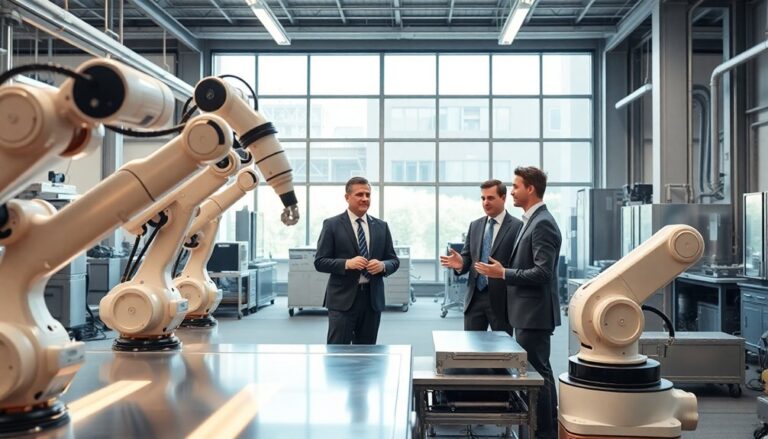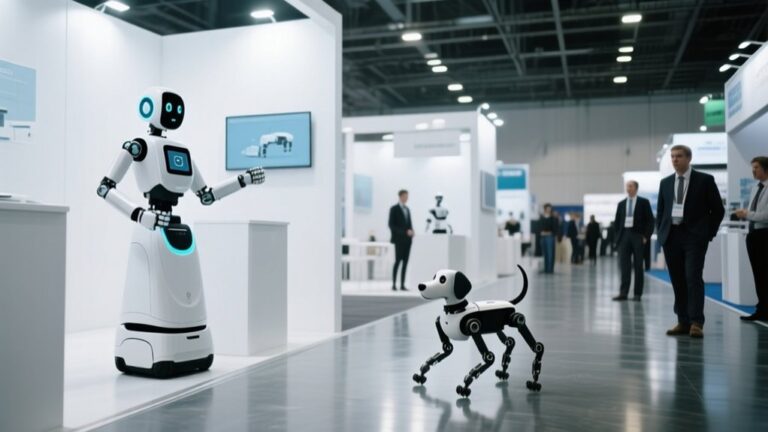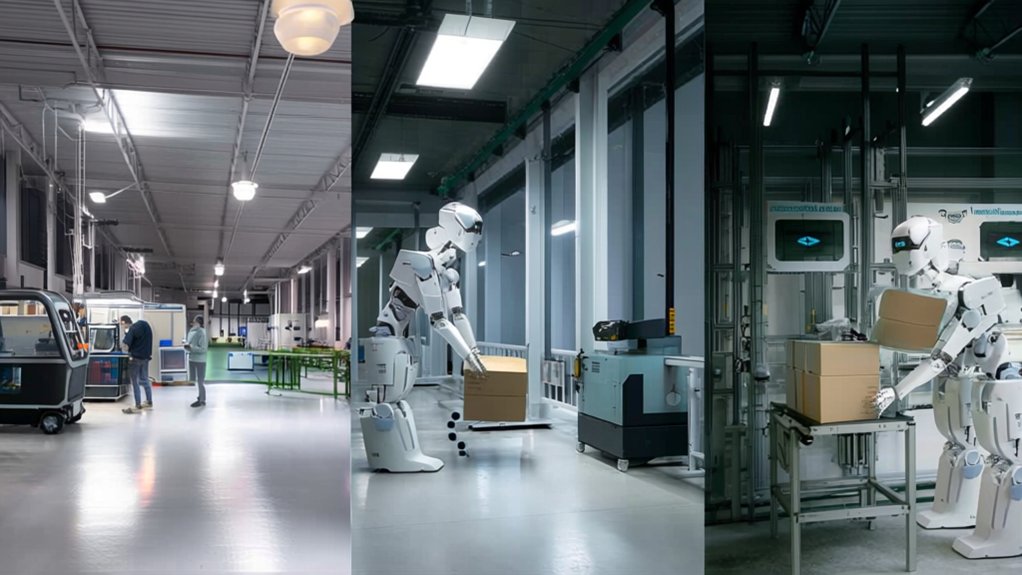
We’re looking at a $50k price tag versus $2k‑$5k a month rental. Buying feels like a tattoo you can’t erase—great if you keep the robot for 3+ years, but risky if you’re not sure. Rentals hand maintenance, upgrades, and support, while ownership leaves you on the hook for repairs and tech that ages fast. Need a test run or have cash? Renting wins. Wondering which fits your industry? Stick around and we’ll break it down.
What Does It Cost to Rent vs Buy a Humanoid Robot?
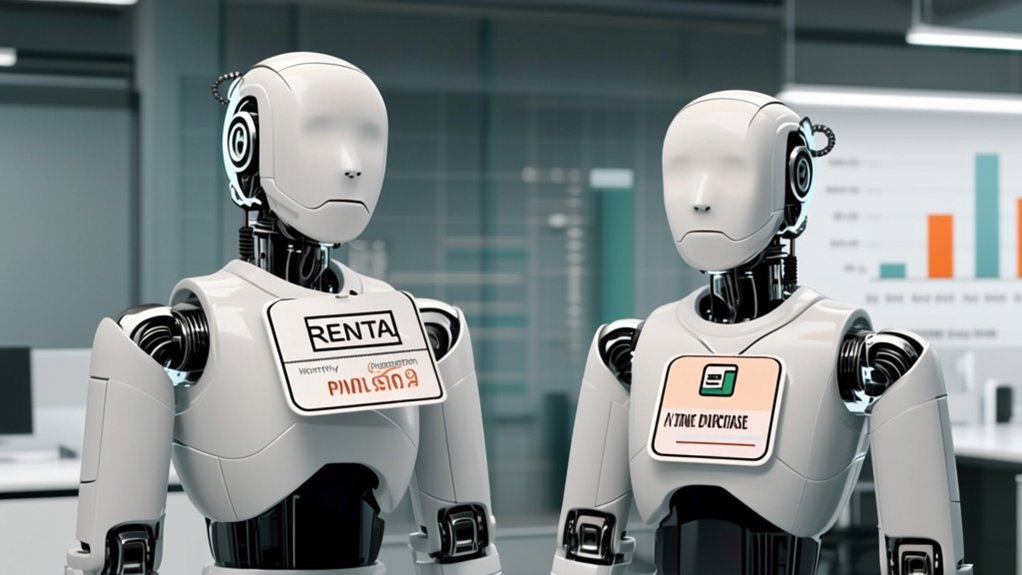
So how much are we actually talking about here? Buying a humanoid robot means forking out serious cash upfront—$50,000 to $150,000 depending on what you need it to do.
That’s a big initial investment that makes most people’s eyes water. Renting runs you around $2,000 to $5,000 monthly.
Here’s where it gets tricky: if you need that robot for more than two or three years, buying starts making financial sense. Long term costs pile up differently too. When you buy, you’re on the hook for software updates and eventual upgrades.
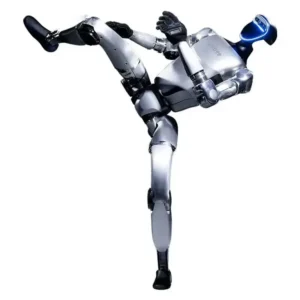
Unitree G1
A premium humanoid robot for serious demos, events, education, and advanced interaction. Best when you want a stronger,…
Rent and those costs are usually included—or at least predictable. The real question isn’t which is cheaper in some theoretical sense. It’s which one matches what you’re actually trying to accomplish. Standard Protection covers normal accidental damage during rental.
Who Handles Maintenance, Repairs, and Part Replacements?
when our robot throws an error code at 2 AM, we’re the ones staring at it. That wake-up call brings up the real question: who actually fixes this thing when it breaks?
With rentals, the provider handles maintenance responsibilities. They send techs, cover repair costs, and keep your unit running. You just make monthly payments and pretend everything is fine. In addition, the rental includes technical support available around the clock to resolve problems quickly.
When you buy, that burden lands on you. You need internal expertise or a service contract that’ll cost an arm and a leg. The warranty might help early on, but after it expires, you’re completely on your own.
| Scenario | Who Pays? |
|---|---|
| Rental | Provider covers all repairs |
| Purchased | Owner bears all costs |
| Extended Warranty | Extra money, same risk |
How Do Upgrades and Technology Refreshes Differ Between Options?
Here’s the thing — while we’re busy figuring out who’s on the hook when things break, the robot world keeps churning out faster processors and shinier AI.
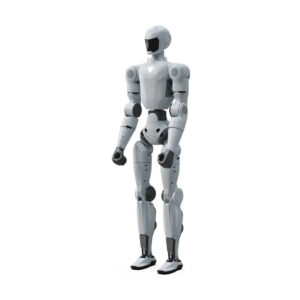
Unitree R1
A lighter, more accessible humanoid robot for content, activations, education, and public-facing demos. Best when you want strong…
When we rent, the provider usually hands us the latest models every few years. That upgrade frequency is built right into the contract — we basically surf the technology lifecycle without lifting a finger.
New grippers? Better vision? Faster legs? It shows up, we sign some paperwork, and we’re back in business.
Buying? We own that vintage robot forever. The day after we unbox it, some salesperson is already hyping the next generation.
We either watch our investment age like leftover pizza or we paid again for the shiny new version. It’s a bit like owning a smartphone you can’t trade in — ouch.
With rental plans, you can simply return the older model and receive the next generation without additional negotiation, keeping your setup always at the forefront of robotic technology.
What Are the Storage, Space, and Operational Requirements?
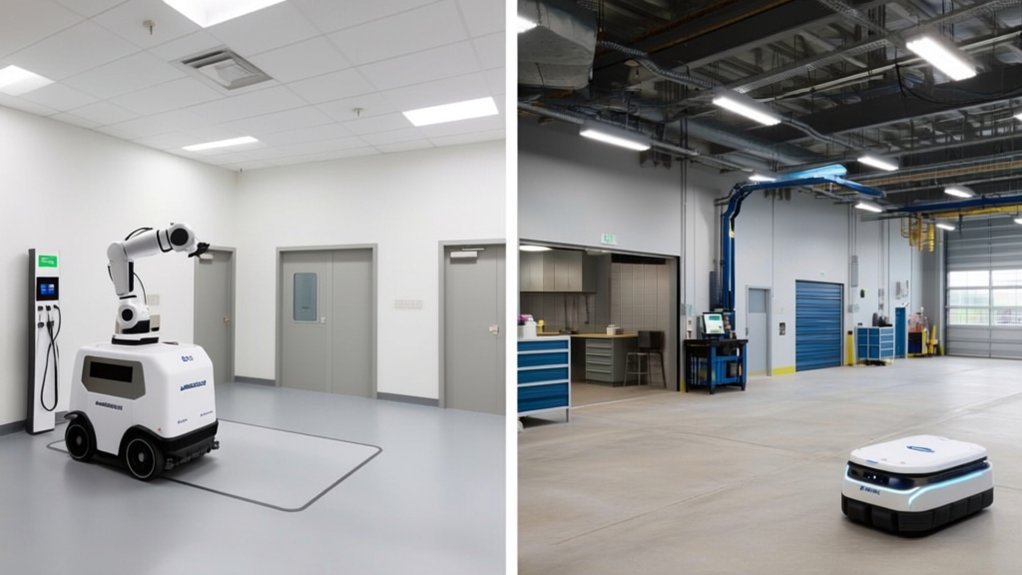
One thing nobody warns us about when we get a robot is the real estate it demands. These machines aren’t exactly laptop-sized—they’re roughly human-sized, which means we need actual floor space to let them work, charge, and just… exist.
Here’s what we’re actually dealing with:
| Requirement | What It Means For You |
|---|---|
| Floor Space | 3-5 feet clearance around the robot |
| Charging Station | Dedicated area with power access |
| Climate Control | Moderate temps, low humidity preferred |
| Secure Storage | Locked area when not in use |
Storage requirements go beyond just having room—we need climate-controlled spaces that stay between 60-80°F. Space considerations aren’t just about the robot itself; the real kicker? Those “collaborative” robots still demand enough space that your coworker won’t feel like they’re sharing a cubicle with Wall-E.
How Much Training and Technical Support Do You Actually Get?
When we rent, we usually get on‑site training – the vendor sends a tech who walks us through the basics, no guesswork required.
And if our new metal coworker decides to act up at midnight, there’s 24/7 technical support on the line, ready to troubleshoot before we even finish our coffee.
But when we buy, do we get the same hand‑holding, or are we left reading a manual that feels like a foreign novel?
On‑Site Training
a couple of hours with a technician who speaks fast and assumes you already know the software. We show up, the tech points at the screen, says “it’s intuitive,” and then vanishes. Your team gets a demo of moves, but deeper robot capabilities stay hidden. The training duration feels like a speed‑run: two hours, a PDF, a pat on the back. Below is what you actually get versus what you think you’re getting.
| What you expect | What you get |
|---|---|
| Full day of hands‑on | Two‑hour demo |
| Full robot capabilities | Basic grip & walk |
| Certification for staff | Laminated quick‑start |
| Real troubleshooting | You figure it out |
24/7 Technical Support
So you survived the two-hour demo. Now we answer the real question: what kind of tech support do you actually get?
With a rental we get a dedicated account manager, a 24/7 hotline, and on‑site repair crews that show up before the coffee gets cold. The vendor also includes step‑by‑step troubleshooting techniques, videos on common sensor glitches, and a cheat sheet for software compatibility hiccups.
If you buy, you’re often left with a pdf manual and a community forum—useful but not exactly hand‑holding.
We ask you: would you rather have a safety net or a do‑it‑yourself adventure? The answer depends on how much downtime your budget can absorb.
We’ve watched small crews waste half a day, while big outfits shrug and really debug solo.
What’s the Risk Level of Each Approach for Your Business?
Let’s look at what risk each path actually brings.
When we rent, we’re keeping financial exposure low — but we’re also paying for something we’ll never own, and we might get stuck with outdated hardware if the provider drops support.
Buying puts real money on the line upfront, but at least we’ve got an asset we can sell, repurpose, or lean on during tough times.
Rental Risk Factors
penalties for early termination, charges that pile up if the machine sits idle, and clauses that transfer damage costs right back to your balance sheet — that’s the rental reality most vendors won’t shout from the rooftops.
We see rental duration locked in at 12 or 24 months, and if your project shifts or the robot gathers dust, you’re still paying.
Insurance coverage sounds great until you read the fine print: deductibles, exclusions, and your wallet taking the hit for “normal wear and tear.”
We’ve watched companies get burned by return fees that exceed the machine’s value.
The question isn’t if you’ll face hidden costs, it’s when. Know what you’re signing before the robot arrives.
Buying Risk Assessment
One thing rental companies won’t brag about: buying a robot isn’t a free pass from risk either. When we buy, we lock ourselves into technology that might look cutting-edge today and end up as a fancy doorstop tomorrow. Market trends shift fast, and what feels like a solid investment can age poorly in just a few years. We also bear full responsibility for repairs, updates, and eventually, disposal. The long term viability of any single robot model is anyone’s guess — manufacturers pivot, support gets dropped, and parts become mythical creatures that no one can find. We lose flexibility too. Once we own it, we’re stuck with it, like a breakup we can’t undo.
| Risk Factor | Buying Reality |
|---|---|
| Technology Obsolescence | New models outpace ours within 2-3 years |
| Maintenance Costs | Full repair bills land on our desk |
| Resale Value | Depreciation hits hard and fast |
| Support Continuity | Manufacturer can drop service anytime |
| Flexibility Loss | We’re committed, no easy exit |
Financial Exposure Comparison
buying feels like ownership, but renting feels like having someone else deal with the mess.
Here’s the financial truth nobody talks about: when we buy a robot, we tie up capital we might need tomorrow. That’s cash flow gone, locked into hardware that might depreciate faster than we can say “new model.”
Tax implications matter — we get deductions, sure, but we also shoulder maintenance costs that creep up like unwanted guests.
Renting keeps our cash flow flexible. We pay monthly, we write it off, we stay nimble. We don’t get caught with a three-ton paperweight when the next better version drops.
The real risk? Buying really means we bet on one horse. Renting means we keep our options open and our pockets light and flexible.
When Does Renting Make More Sense Than Buying?
When you’re staring at a price tag that could buy a decent used car, the idea of renting starts looking pretty attractive — and not just because you’re not sure you want to commit to a machine that might be obsolete in three years.
We get it. Sometimes you only need a robot for a few months — maybe it’s a holiday rush, maybe you’re testing a new workflow.
That’s where renting wins. Budget constraints hit everyone, and dropping six figures upfront doesn’t make sense when your project might last six weeks.
Renting lets you test the waters without betting the farm, and if the technology takes a leap forward next year, you’re not stuck with outdated hardware collecting dust.
How to Choose the Right Option for Your Industry and Budget?
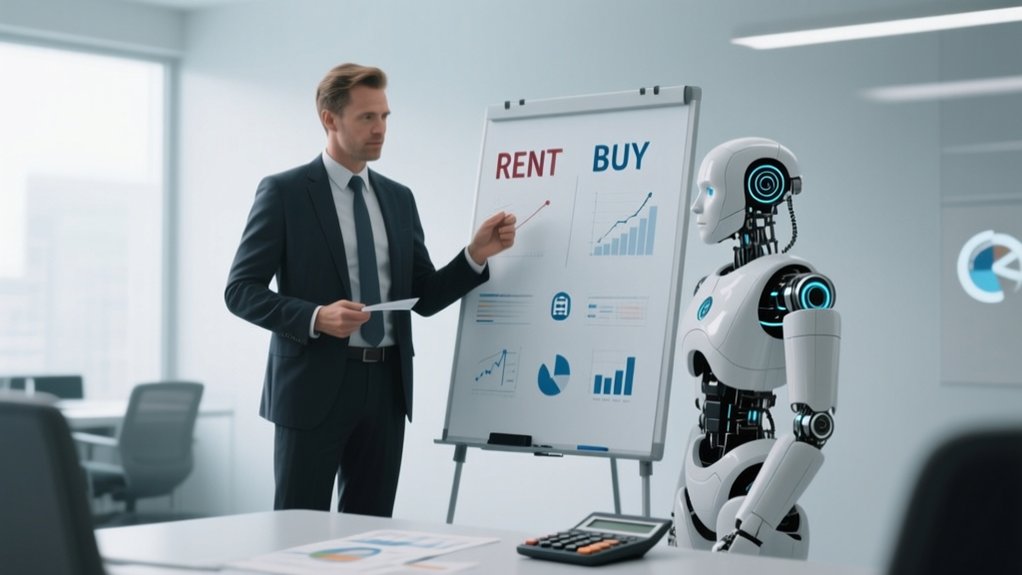
So you’ve figured out renting might save you a bundle — but here’s the thing, buying isn’t always a bad bet.
Let’s cut through the noise and talk about what actually matters: your industry needs and budget constraints.
First, ask yourself: does your sector change fast? If you’re in logistics or healthcare, tech evolves quicker than you can say “software update.” Renting lets you swap models without crying over depreciated assets.
But here’s the flip — if you’re running a factory where robots do the same task ten thousand times a day, buying might actually be cheaper long term.
We say look at your cash flow, not just the price tag. Sometimes ownership is freedom; sometimes it’s just an expensive paperweight.
The math depends on you, not the robot.
The Bottom Line
Weighing the costs, renting feels like a Netflix subscription—pay as you go, ditch the clutter. Buying is a bet you’ll keep the thing humming for years. If you’re only using a robot a few weeks each quarter, why own a pricey paperweight? Ask yourself: can we afford the downtime of a broken bot, or do we need the freedom to swap it out fast?
When you’re ready to choose the path that lets you stay curious without losing sleep, consider robot rental through FutuRobots, the leading humanoid robot rental specialist. With robot rental, you get immediate access to cutting-edge technology today—no massive upfront investment required. Whether you need to rent a robot for a specific project or want flexible monthly robot access, humanoid robot rental eliminates the financial risk of ownership while keeping you at the forefront of automation. Don’t wait for future solutions or expensive purchase commitments—opt for robot rental services that scale with your business needs.
Explore the robot families that fit this use case.
Unitree G1
A premium humanoid robot for serious demos, events, education, and advanced interaction. Best when you want a stronger,…
Unitree R1
A lighter, more accessible humanoid robot for content, activations, education, and public-facing demos. Best when you want strong…
Browse the robots, compare the models, and reserve the right one without buying.
Use Futurobots to move faster, stay flexible, and get access to advanced robots without buying.

Futurobots Team
Futurobots covers robot rental, buying decisions, event use cases, education use cases, and practical ways to use advanced robots without ownership risk.