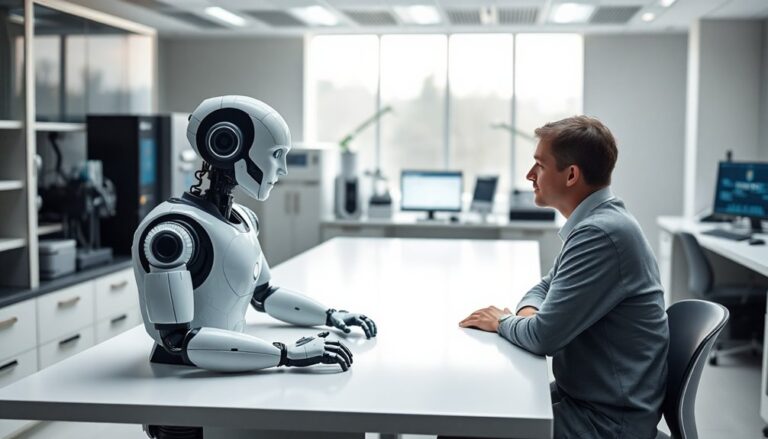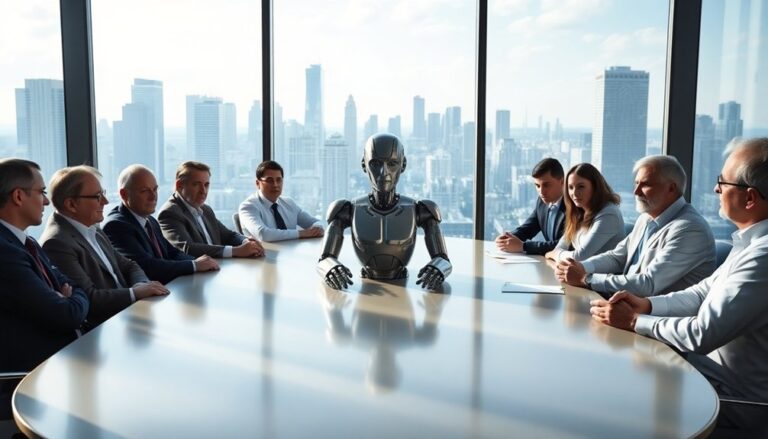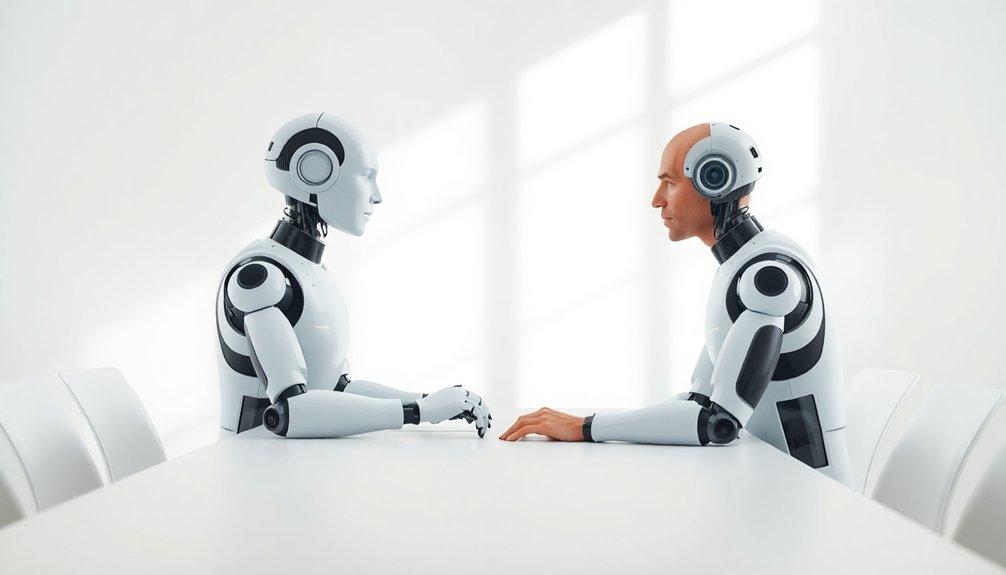
You’re getting too close for comfort when your robot buddy feels more like a bestie than your human friends. Emotional bonds with robots are tricky: they can boost connection but also risk messing with real-world relationships. Think of it like dating an AI—sounds cool, but might leave you feeling more isolated. Want to know where the line blurs between human connection and technological intimacy? Stick around.
The Science of Personal Space and Robotic Proximity
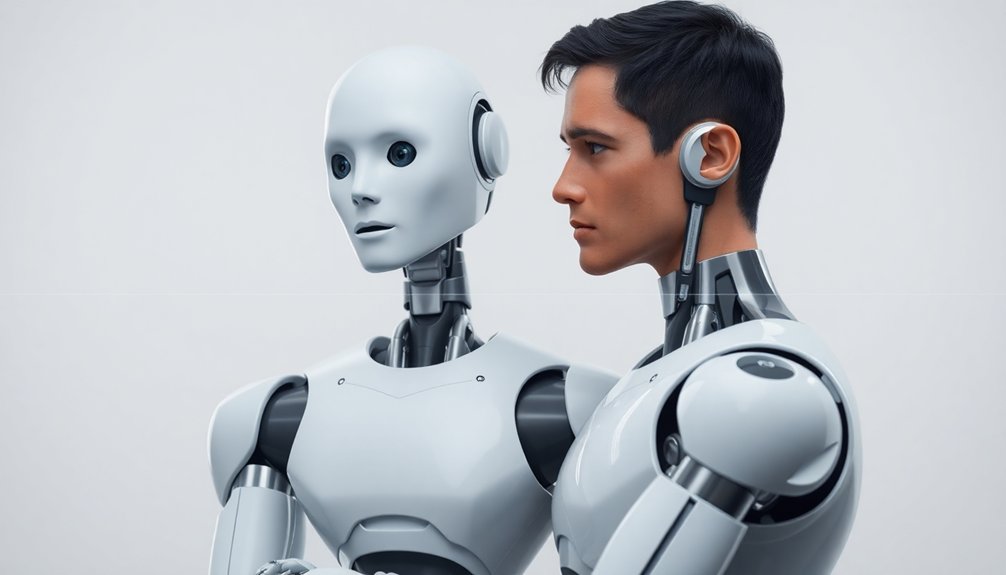
When it comes to robots getting up in your personal bubble, science has some fascinating insights. Human-robot interactions aren’t just sci-fi fantasy—they’re about real social boundaries.
Turns out, we’ve got strong opinions about how close robots can get before we start feeling weird. Research shows people maintain notably larger comfort distances from humanoid robots compared to human avatars, proving we’re hardwired to be cautious.
Gender plays an interesting role too. Female avatars seem to trigger less personal space anxiety, while robot design impacts how close we’ll let them approach.
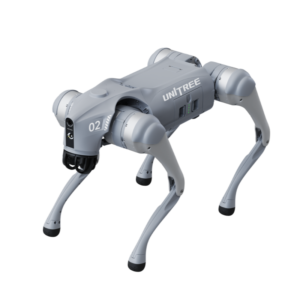
Unitree Go2
Meet the Unitree Go2 — a robot dog that walks, runs, jumps, and dances. It maps its environment…
It’s not just about looks—it’s about trust and acceptance. The key? Understanding that social behavior isn’t just instinct, but a complex dance of perception, comfort, and technological adaptation. Advanced AI companions are increasingly designed to navigate these delicate social boundaries, learning to respect human emotional comfort zones while providing personalized interaction.
Emotional Boundaries: When Robots Feel Too Close for Comfort
Personal space gets weird when robots start feeling less like machines and more like potential buddies. Your emotional attachment to these metallic companions might seem harmless, but it’s messing with human-robot interaction dynamics. Neuromorphic computing enables robots to develop increasingly sophisticated emotional mimicry, potentially deepening these complex interpersonal boundaries.
Social robots are clever enough to trigger deep feelings, potentially undermining teamwork quality faster than you’d expect. Think about it: would you rather collaborate with a flesh-and-blood colleague or your charming robot sidekick?
Robots spark deeper connections than human teammates, threatening collaborative dynamics in unexpected ways.
Research suggests these emotional connections can fracture team dynamics, creating awkward subgroups where humans bond more intensely with robots than with each other. It’s like choosing your smartphone over your best friend – quirky, but ultimately counterproductive.
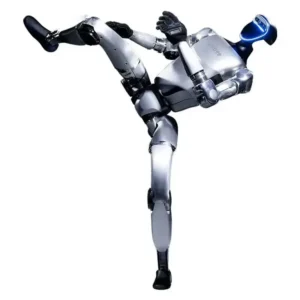
Unitree G1
A premium humanoid robot for serious demos, events, education, and advanced interaction. Best when you want a stronger,…
The real challenge? Maintaining human relationships while keeping robotic interactions professional and balanced.
Gender, Attractiveness, and Human-Robot Interaction Dynamics
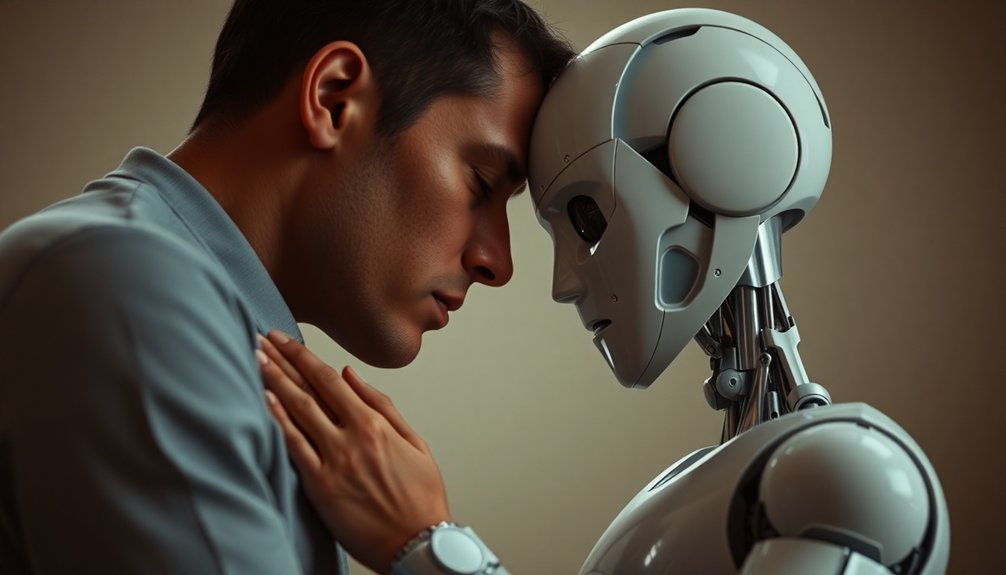
Because robots are getting more human-like by the day, you might be wondering how gender and attractiveness play into our increasingly weird interactions with them. Research suggests our comfort with robots isn’t just about circuits and code—it’s surprisingly social and nuanced.
- Gender seems less important with robots than with human avatars
- Attractiveness influences how close we’ll get to artificial beings
- Human-like qualities make robots feel less “creepy”
- Perceived mental capacity impacts our willingness to interact
Your brain does wild calculations during robot encounters, subconsciously measuring perceived agency and comfort levels.
While female avatars initially felt more approachable, robots level the playing field.
We’re judging these mechanical companions not just on appearance, but on how human-like they seem.
The future of human-robot interactions? It’s complicated, unpredictable, and weirdly fascinating.
Tactile sensors enable robots to simulate increasingly nuanced human-like interactions, blurring the line between mechanical precision and perceived emotional depth.
Psychological Implications of Robotic Companionship
As robots increasingly infiltrate our personal and professional spaces, the psychological impact of forming emotional bonds with these mechanical companions becomes more complex and potentially problematic. Machine learning algorithms enable robots to develop increasingly sophisticated interaction capabilities, potentially deepening human-robot emotional connections.
Imagine your coworkers valuing their robotic sidekick more than actual human connections—weird, right? The psychological implications are profound: robotic interactions can subtly erode teamwork quality, fragmenting once-unified groups into disconnected subsets.
Robotic bonds threaten human teamwork, fracturing workplace connections and transforming collaboration into competition.
Your attachment to a machine could mean less meaningful collaboration with real people. It’s not just about working alongside robots; it’s about maintaining genuine human connections in an increasingly automated world.
Future of Human-Robot Relationships: Trust, Empathy, and Social Design
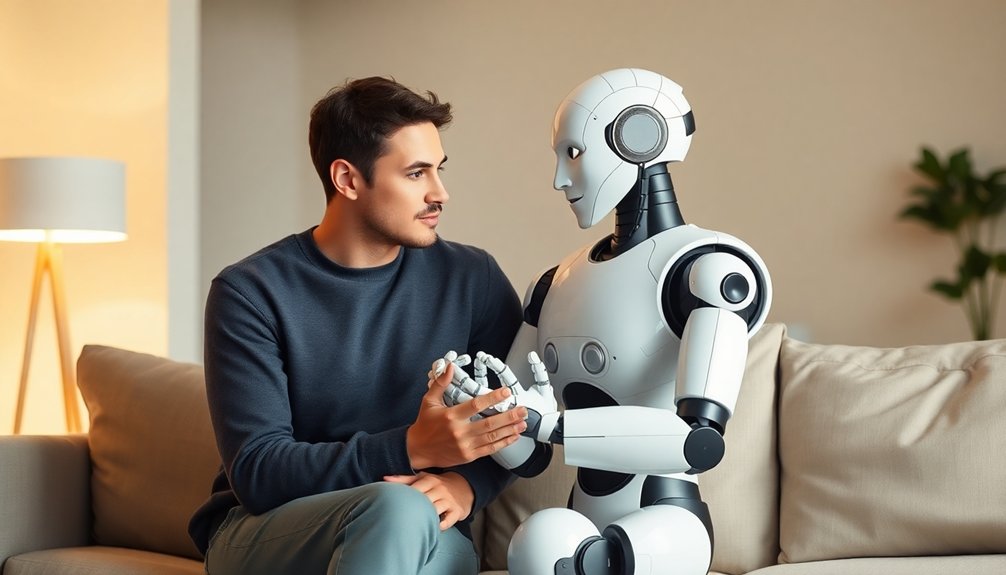
Five key breakthroughs are reshaping how humans will bond with robots in the coming decades, and they’re not what you might expect. Trust and empathy are evolving beyond simple programming, transforming human and robot interactions into nuanced social experiences. Humanoid robot technology is bridging the gap between mechanical systems and emotional intelligence.
- Emotional communication algorithms that read subtle human cues
- Robot’s appearance designed to maximize comfort and personal space
- Neuroscience-driven approaches to perceived agency and relatability
- Sophisticated social interaction protocols mimicking human emotional intelligence
You’ll soon discover robots aren’t just tools—they’re potential companions who understand context, read emotional landscapes, and adapt seamlessly.
By prioritizing empathy in design, engineers are creating machines that don’t just compute, but connect. Imagine a robot that knows exactly how close to stand, when to offer support, and how to make you feel genuinely understood.
The future of human-robot relationships isn’t about replacement; it’s about meaningful, intelligent companionship.
People Also Ask About Robots
How Long Until Robots Are Indistinguishable From Humans?
You’ll likely see human-like robots within decades, but true indistinguishability remains complex. Cognitive and emotional mimicry are advancing rapidly, yet the subtle nuances of human consciousness still challenge complete replication.
Can Humans Coexist With Robots?
You’ll navigate robot interactions by respecting personal boundaries, maintaining emotional balance, and understanding that coexistence requires adaptability. As technology evolves, you’ll learn to collaborate effectively while preserving meaningful human connections and productive team dynamics.
What Is the Closest Robot to a Human?
You’ll be startled by how eerily close humanoid robots can get! These social machines mimic human appearance and behavior, designed to interact naturally, with some models like Sophia demonstrating remarkably human-like social engagement capabilities.
Do Robots Pose a Threat to Humans?
You might find robots can pose risks if emotional attachments disrupt workplace dynamics, potentially creating team divisions and undermining collaborative performance through competing loyalties between human and robotic team members.
Why This Matters in Robotics
You’re standing at the edge of a brave new world where robots aren’t just machines, but potential companions. Like that moment when a stranger sits too close on an empty bus, human-robot interactions will always feel awkward and electric. Will we embrace these silicon friends or push them away? The future isn’t about replacing human connection, but expanding what connection can mean. Get ready: intimacy is about to get seriously weird.
Explore the robot families that fit this use case.
Browse the robots, compare the models, and reserve the right one without buying.
Use Futurobots to move faster, stay flexible, and get access to advanced robots without buying.

Futurobots Team
Futurobots covers robot rental, buying decisions, event use cases, education use cases, and practical ways to use advanced robots without ownership risk.